


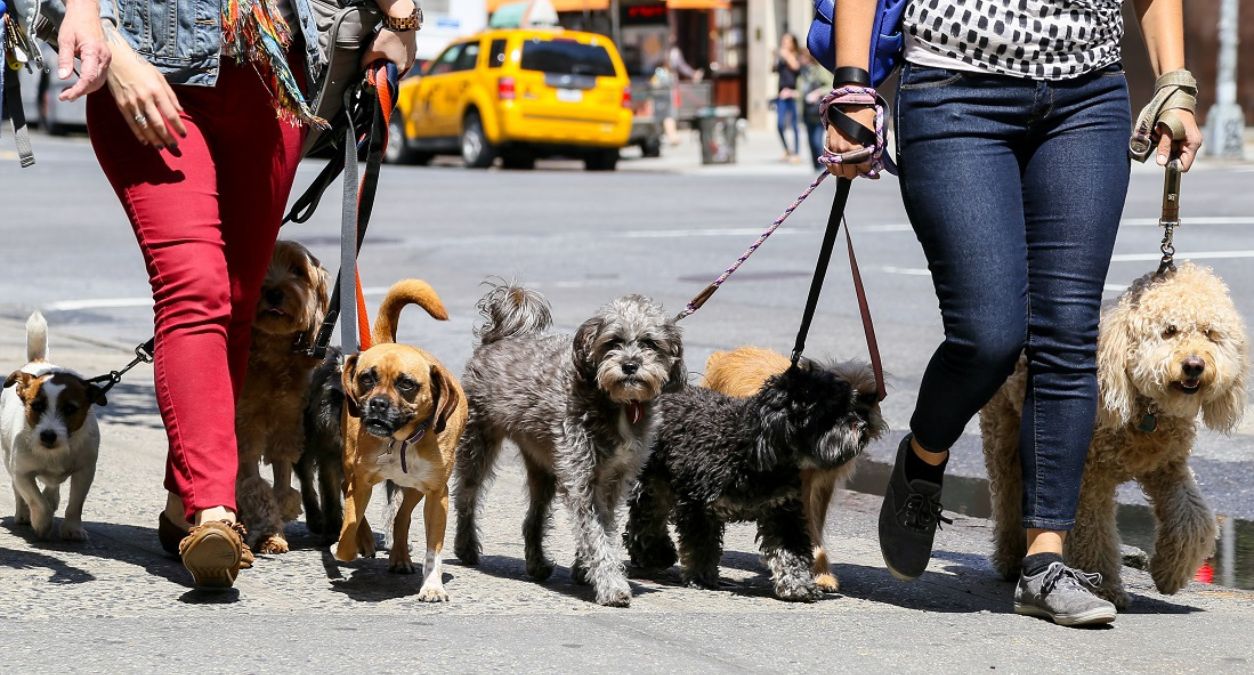
Employing Staff for Your Dog Walking Business

The set-up of many professional dog walking businesses is fairly simple. The majority of operators will be working on a sole trader basis, delivering their walks, managing administration and financial matters on their own.

However, as a business grows so too does the need to employ staff. As a dog walker that could be because you have built up a large enough book of clients that in order to grow you need an extra pair of hands or two.

When pondering whether to employ a member of staff there are a number of things to consider.


Financial considerations

First and foremost, you will need to think whether a member of staff is financially sensible. Of course, more walkers in your business means the opportunity to walk more dogs. But it also means another person’s salary that will need to come our of your company’s finances.

Some businesses will opt to pay staff on a ‘per-walk’ basis, giving them a percentage of the money a client may pay for a walk. Other businesses will choose to work on a more traditional hourly wage or salary.

If the latter is your way of working consider this. If you charge a client £10 an hour to walk their dog and your staff member takes two dogs out at a time, that is £20 coming into the business. Based on paying your employee minimum wage (between £5.60 and £7.50 depending on age), that means you would be left with between £12.50 and £14.40 in the businesses bank account before any tax was paid.

Of course, that is an extra amount of money than would have been there if you didn’t have the staff member to call on, but it is not as simple as that.

You will need to consider whether you will be paying your employee petrol costs to get to and from the client’s house, whether you will guarantee them a set number of hours a week as well as any other bonuses.


Taxes and pensions

It’s not only the direct financial implications that having staff will have on your business. There’s plenty of extra administration-based tasks you will need to fulfil.

First of all you will need to ensure that any potential staff members are fully DBS checked, which will confirm whether they have any criminal convictions that you should be aware of. This will cost you £25 per employee to carry out. You will also need to check they have the legal right to work in the UK. This can be done by taking their National Insurance number when you provide them with their contract.

You will also need to inform HMRC that you are taking on staff and register as an employer. By doing this you will receive your PAYE Employer Number, which will allow you to pay tax and National Insurance when you pay the staff member.

Furthermore, if you are likely to be paying your new dog walker over £10,000 a year and they are over 22-years-old, you may need to automatically enroll them on a workplace pension scheme.

Finally you will need to take out Employers’ Liability. This is a legal responsibility when you take on a member of staff. This will cover you for claims against the business should you and your business activities be blamed for an injury suffered by that staff member. Many insurance providers, including Protectivity, will allow you to add Employers’ Liability to an existing Dog Walking Insurance policy for a small fee.


Business operations

With all of legal factors taken care of you need to remember that by having members of staff, you may have to change the fundamental way in which you operate your dog walking business.

Think about things such as:

– Will your new walker have ‘their own’ clients? Or will you share them between you?

– How much training will you provide your new staff member?

– Will you ask them to help with other aspects of your business such as marketing and administration?

One thing that may affect some dog walkers decision to expand is the extra paperwork and administrative duties that having staff entails. By taking on employees you may find yourself having less time to do the thing that made you start the business in the first place, the enjoyment of walking dogs. This diversion away from the act of dog walking may be a reason not to hire a member of staff and keep your clients, their dogs and your business to yourself.

All dog walking businesses and the people that run them will be different. Some will appreciate that in order to grow they need more dog walkers on their books, whilst others will be happy with maintaining a healthy number of clients and dogs without the need for expansion.

If you do opt for the hiring approach, just remember to consider all the added responsibilities that come with it.


About Us

We’re one of the leading providers of insurance for pet businesses, and we offer a variety of tailored products such as Dog Walking insurancePet Sitting Insurance and Dog Grooming Insurance policies.

Get Dog Walking Insurance from Protectivity


*Disclaimer – This blog has been created as general information and should not be taken as advice. Make sure you have the correct level of insurance for your requirements and always review policy documentation. Information is factually accurate at the time of publishing but may have become out of date. 

Recent Blogs

Ways to raise money for your business Image

Business

Ways to raise money for your business

Starting a business is one thing - finding the money to actually get it off the ground is another. Whether you

Health & safety requirements for sole traders Image

Business

Health & safety requirements for sole traders

Health and safety can sometimes feel like something designed for larger companies. Yet if your business could imp

What to include in a basic risk assessment Image

Business

What to include in a basic risk assessment

Understanding what to include in a risk assessment is an important step for any business that wants to manage

How to write a business continuity plan Image

Business

How to write a business continuity plan

Unexpected disruptions can affect any organisation. Severe weather, cyber attacks, supply chain problems, or IT

When A Sole Trader Should Consider Going Ltd Image

Business

When A Sole Trader Should Consider Going Ltd

For many small business owners in the UK, starting out as a sole trader is the simplest way to begin trading. The

How to create a simple work contract Image

Business

How to create a simple work contract

Hiring someone for the first time is an exciting step for any business. Whether you're bringing on your first emp

Personal accident insurance for the self-employed: Do you really need it? Image

Business

Personal accident insurance for the self-employed: Do you really need it?

If you’re self-employed and you break your leg tomorrow, what happens to your income? For most sole traders,

What is profit margin? Image

Business

What is profit margin?

For many small businesses, sales figures are the headline number. But revenue alone doesn’t determine succes

How to file company accounts online Image

Business

How to file company accounts online

Filing company accounts is one of those jobs that sounds more intimidating than it often is. If you run a small U

Incident insights in pet care: What 2025 claims data tells us Image

Pet Business

Incident insights in pet care: What 2025 claims data tells us

Caring for pets professionally is deeply rewarding, but it also comes with a unique mix of responsibility, unpred

Simply find the insurance you need.