

Table of contents
Table of contents
Contributors

My main focus is managing the blog and product content for the Protectivity website ensuring everything aligns wi...
For self-employed tradespeople, tools are not just kit. They are what keep jobs moving, customers happy and money coming in.
Unfortunately, tool theft remains a serious problem across the UK trade sector. Whether you are a builder, electrician, plumber, carpenter, roofer, heating engineer, landscaper, decorator or another self-employed trade professional, losing tools can cause major disruption.
As theft continues to affect tradespeople, insurers are also placing more focus on proof of ownership when reviewing claims. In other words, it is not always enough to say what was stolen. You need records that show the tools belonged to you and they were bought from a legitimate source.
One of the easiest ways to strengthen that evidence is to record your tool serial numbers.
Tool theft remains a major problem for UK tradespeople
Tool theft is not just an occasional inconvenience. For many sole traders and small trade businesses, it is a real risk that can affect work, income and customer commitments.
Research from Wickes (2025) highlights how 1 in 5 (22%) of tradespeople get hit with losses over £500 due to tool theft.*
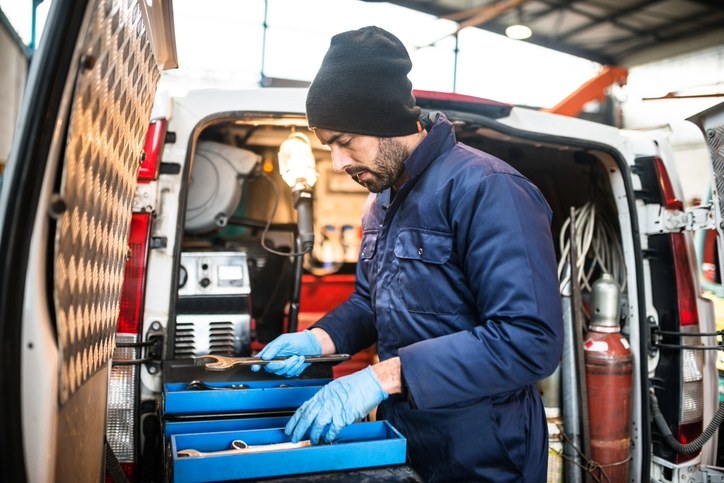
Professional tools are expensive, portable and easy to resell, which makes them attractive to thieves. Vans parked overnight, building sites, garages and storage units can all become targets.
The cost is rarely just the price of replacing the tools. If you cannot work while you source new equipment, you may lose days of income, delay jobs and risk letting customers down.
For a self-employed tradesperson, a van break-in can bring work to a stop overnight.
Find out how Tools Insurance can help
Why recording serial numbers matters
Most tradespeople would recognise their own tools straight away. The challenge comes when you need to prove ownership to the police or your insurer after a theft.
A serial number is a unique identifier given to a tool by the manufacturer. Recording it helps link that specific tool to you and your business.
If stolen tools are recovered, serial numbers can help the police identify the rightful owner. Without them, recovered equipment can be much harder to trace and may never make its way back to you.
Serial numbers can also support an insurance claim by giving your insurer a clearer record of what was stolen and what it was worth.
Photos are helpful, but they are stronger when backed up with receipts, make and model details, and serial numbers.
The insurance landscape for tools
As tool theft claims have increased over recent years, insurers have faced rising costs. This has led many providers to apply greater scrutiny when assessing claims.
Tradespeople may be asked to provide evidence that stolen equipment belonged to them. If records are missing or incomplete, a claim can take longer and may be harder to validate.
That does not mean insurers are looking to reject genuine claims. They simply need enough information to confirm ownership and assess the value of the loss accurately.
Keeping a simple, up-to-date tool inventory can make that process much easier if the worst happens.
Don’t assume your tools are fully covered
A common mistake is assuming that van insurance automatically covers tools to the level you need.
In reality, cover can vary widely. Some policies include limited tool protection, while others may have restrictions around overnight storage, security requirements or maximum claim amounts.
Some trades only discover these gaps after a theft has happened, when it is too late to change the policy.
That is why dedicated tools insurance or tradesperson insurance can be worth looking at. These policies are often built around the risks faced by people who rely on their tools every day.
Before renewing any policy, check what is covered, what the limits are and what security conditions you need to follow.
What you need to prove ownership of your tools
Creating a tool inventory might feel like another admin job, but it is one of the most useful records a self-employed tradesperson can keep.
For each key item, record the make, model and serial number. It is also worth keeping photos and proof of purchase where you have them.
If you no longer have receipts for older tools, do not ignore them. Photos and serial number records can still provide useful evidence.
Many tradespeople keep digital copies of receipts and tool records in cloud storage so they can still access the information if a phone, laptop or van is stolen.
A simple question to ask is this: if you had to make a claim tomorrow, could you prove what tools you owned?
If not, now is a good time to update your records.
Be careful when buying second-hand tools
With tool prices still high, second-hand tools can be a practical option for many tradespeople.
There are plenty of genuine sellers, but stolen tools can also appear on online marketplaces, social media groups and local selling platforms.
If a deal looks too good to be true, take a closer look before handing over any money.
Ask for the serial number, proof of purchase or a clear explanation of where the tool came from. If the seller cannot provide any of these, treat it as a warning sign.
Serial numbers that have been scratched off, covered or removed are another red flag.
Buying stolen tools can cause problems for the buyer as well as the original owner. If the equipment is later identified as stolen, it could be seized by police.
Taking a few extra minutes to check before you buy can save a lot of hassle later.
How digital tool tracking is improving security
Digital tools are making it easier for self-employed trades and small businesses to keep track of equipment.
Tool inventory apps and asset management systems can store serial numbers, receipts, photos and service records in one place.
Some systems also create QR codes or labels that can be added to equipment, making checks faster and helping you keep track of what is on site, in the van or in storage.
Tracking technology is becoming more common too. GPS trackers, Bluetooth tags and connected tool systems can help monitor valuable equipment and may support recovery if theft occurs.
No system can completely prevent theft, but accurate digital records make it easier to understand what you own and what has gone missing.
For insurance providers, organised records can also make the claims process clearer and more straightforward.
Take steps to protect your tools in 2026
Tool theft is unlikely to disappear soon, but there are practical steps every self-employed tradesperson can take to reduce risk and improve protection.
Start by recording serial numbers for your main tools. Take photos, save receipts digitally and keep your records backed up somewhere secure.
It is also worth reviewing vehicle and storage security. Upgraded locks, alarms, secure toolboxes and tracking devices can all help make your equipment less vulnerable.
Review your insurance regularly too. Tool values can rise quickly as you add new equipment, so your cover needs to keep up.
Most importantly, do not wait until after a theft to get organised. The best time to create a tool inventory is before you need it.
Summing up your tool protection
For self-employed tradespeople and small trade businesses, tool theft is about far more than replacing equipment. It can mean cancelled jobs, lost income and unnecessary stress.
Recording serial numbers is a simple job, but it can make a big difference when proving ownership, recovering stolen tools or supporting an insurance claim.
As tool theft continues to affect trades across the UK in 2026, keeping accurate records is no longer just good practice. It is a practical way to protect your livelihood.
Spending a little time documenting your tools today could save thousands of pounds and hours of disruption in the future.
How insurance with Protectivity can protect your tools
At Protectivity, we provide affordable tools insurance to cover these incidents commonly faced by tradespeople, including tools of trade theft.
Our policies include Public Liability up to £5 million as standard; you then have the option to add Employers’ Liability insurance; Contractor Works cover and Plant and Tools cover. With plant and tools cover you can add your employees’ tools as well as tools of trade insurance, to protect your tools when left in an unattended van, offsite.
Find out more about our specialist tools cover today!
Source: Wickes research 2025
*Disclaimer – This blog has been created as general information and should not be taken as advice. Make sure you have the correct level of insurance for your requirements and always review policy documentation. Information is factually accurate at the time of publishing but may have become out of date.
Last updated by