

10 Traditional Reiki Hand Positions

Table of contents

Reiki is a Japanese technique for stress reduction and relaxation which also promotes healing. The belief behind this treatment is that a life energy is flowing through our bodies and if this energy is low then we are more vulnerable to illness and stress.

Reiki treatments increase this life energy by placing hands on, or just above the body, creating beneficial emotional and physical effects, healing pain, reducing stress and anxiety.


A typical Reiki session

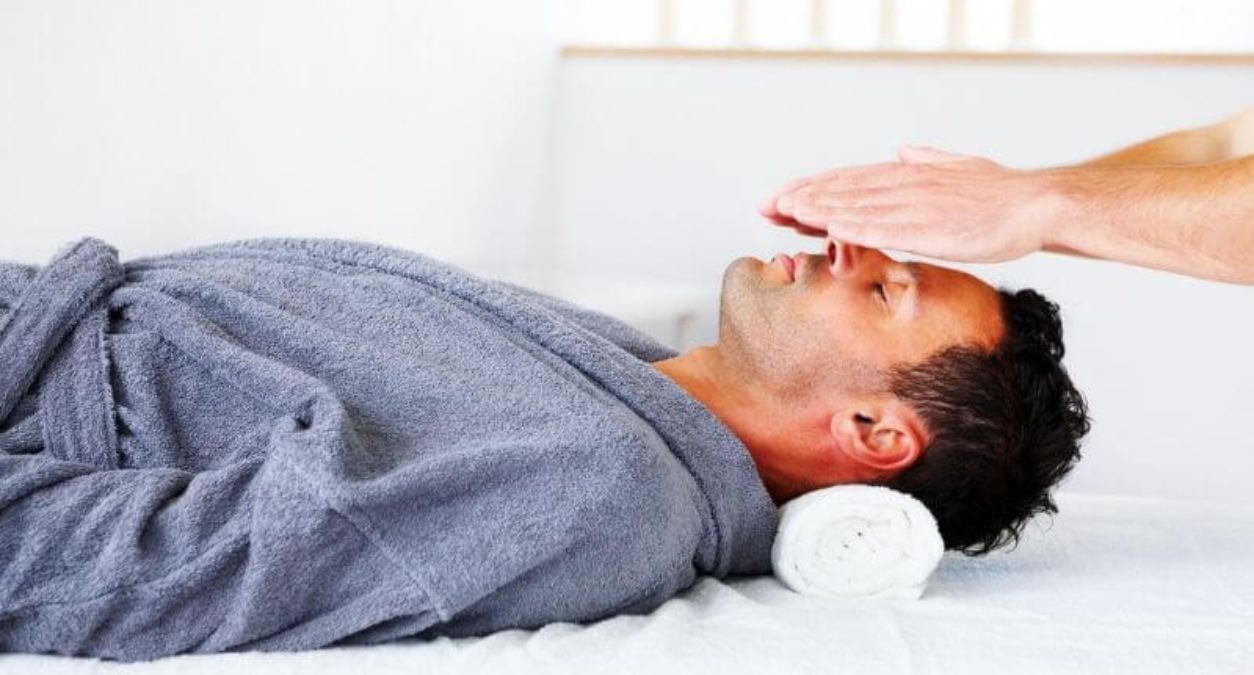
During a Reiki Treatment, a client will lie on a massage table, or a chair if they prefer. There is no significant pressure applied during a Reiki session, instead a practitioner will gently place their hands on a client.

There are a series of key hand positions which, when done in the correct way, will generate the effects needed. Here is a guide to some of the most popular hand positions.

1. Place the palms of your hands gently on your client’s forehead and cover the eyes. Take care not to cover the nose and restrict your client’s breathing.


2. Place hands gently around the temples.


3. Cradle the head by rocking the head very gently from one open palm and then to the other eventually achieving a balanced hold. Your own hands can rest on the table underneath your clients head.


4. Hands are gently placed over your client’s throat. If they don’t feel comfortable with this then your hands can be placed under the throat instead.


5. Hands are placed over the heart and the heart chakra (located between the breasts). They are then placed gently over the upper abdomen.


6. Hands are placed gently over your mid abdomen (solar plexus).


7. At this point, you, as a Reiki Practitioner might continue treatment to include your client’s legs.

Both hands are placed gently on the leg. Repeat for the other leg.


8. Put one hand on the bottom of each foot.


9. The next step would be to ask your client to roll over to their front and for you to apply pressure to your client’s shoulder blades and middle back and then the lower back.


10. At the end of a treatment you may move your hands all over your client’s body to cleanse and remove any leftover debris, transforming any negative energies into positive ones.


At Protectivity, we provide a wide range of what we believe are cost-effective insurance solutions for therapy professionals including Reiki InsuranceCounselling InsuranceMassage Insurance and many more. To see if your speciality can be covered, just visit our Therapy Insurance page and input your technique into the quote box. If we can cover the activity, we will provide you with an instant price.

Get Therapist Insurance from Protectivity


*Disclaimer – This blog has been created as general information and should not be taken as advice. Make sure you have the correct level of insurance for your requirements and always review policy documentation. Information is factually accurate at the time of publishing but may have become out of date. 

Recent Blogs

What is profit margin? Image

Business

What is profit margin?

For many small businesses, sales figures are the headline number. But revenue alone doesn’t determine succes

How to file company accounts online Image

Business

How to file company accounts online

Filing company accounts is one of those jobs that sounds more intimidating than it often is. If you run a small U

Incident insights in pet care: What 2025 claims data tells us Image

Pet Business

Incident insights in pet care: What 2025 claims data tells us

Caring for pets professionally is deeply rewarding, but it also comes with a unique mix of responsibility, unpred

Pros and cons of being VAT registered Image

Business

Pros and cons of being VAT registered

For many small business owners, VAT registration feels like a milestone. It often signals growth – but it can

Business website requirements: is having a website important? Image

Business

Business website requirements: is having a website important?

Most customers start their search for a product or service online. That’s why, for many small businesses, a web

What is PAYE? Image

Business

What is PAYE?

Taking on employees is a major step for any business, but it also brings new legal and financial responsibilities

How to register a business in the UK Image

Business

How to register a business in the UK

Essential steps for independent businesses Starting a business can combine freedom and ambition; the freedom

What is a Purchase Order? Image

Business

What is a Purchase Order?

Managing finances is one of the most demanding aspects of running a small business. As operations grow, so do the

What is the National Minimum Wage for employers Image

Business

What is the National Minimum Wage for employers

The National Minimum Wage plays a crucial role in protecting workers’ pay while shaping employment costs for bu

What is an SME? Small business status explained Image

Business

What is an SME? Small business status explained

If you run an independent business in the UK, whether you’re a freelancer, sole trader, or running a small, lim

Simply find the insurance you need.