


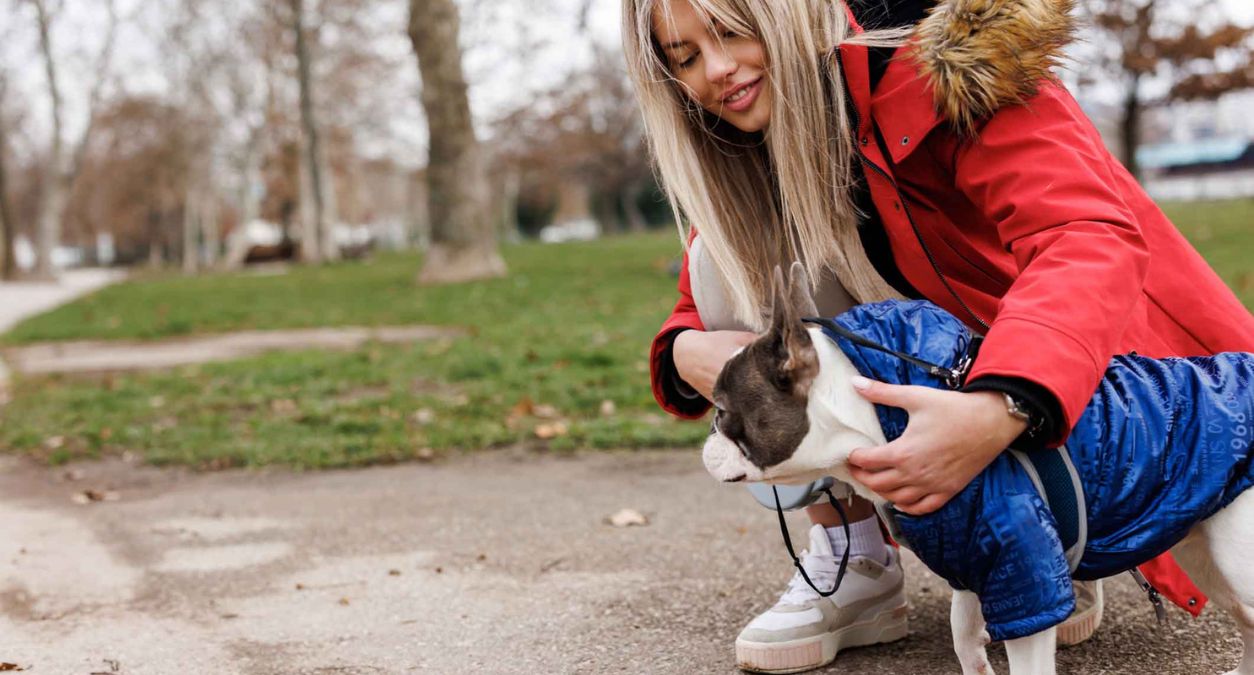
Dog Walking Safety and Protecting Yourself

As a pet business professional the well-being of the animals entrusted to you should be number one priority. However, that doesn’t mean you should neglect your own safety when dog walking.

It’s important to take a number of steps to give yourself the best possible chance of not suffering an injury whilst carrying out your business activities.


Safety starts at home

Dog walking safety starts before you’ve even left home. Good preparation is the foundation of avoiding accidents when caring for your canine clients.

A recent guide introduced by the Pet Industry Federation includes the following advice:

“The dog walker should meet with the dog prior to taking them for a walk so that the walker can become familiar with the dog’s needs and that a pre-assessment can be made to evaluate their personality and behavioural characteristics.”

Not only will a pre-walk meeting allow you as a professional dog walker to make a judgement of how best to protect the dog,  it will also allow you to protect yourself.

For example, a on-lead only walk for an animal that has a history of chasing other animals will reduce the chances of running away and causing itself an injury. On the other hand, if on a pre-walk assessment you discover that certain situations triggers an aggressive response in the dog you can either decline to walk that dog or ensure you avoid putting yourself in such a situation.


Other dog walking injuries

It’s not just aggressive dogs that can see dog walking injuries occur. A study in the USA discovered that between 2004 and 2017 injuries to dog walkers over the age of 65 had more than doubled. The most common injury cited in the report was a broken hip, with injuries to an upper limb following in second.

However, being younger than 65 obviously doesn’t preclude dog walkers from suffering an injury.

Protectivity’s Dog Walking Insurance has an additional Personal Accident benefit which can provide a lump sum payout should a walker suffer an injury whilst carrying out professional dog walking activities.

Under that benefit, we have seen a number of claims from our protected walkers. These have ranged from broken legs after being knocked down by runaway dogs (the most common injury), to thumb injuries caused by a lead, to trapped nerves.

Taking out suitable pet business insurance can ensure that if you were to suffer a serious injury whilst walking, you wouldn’t face serious financial implications of not being able to run your business.


Walking precautions

There are other things that dog walkers can do to ensure their own safety whilst on walks.

Firstly, and perhaps most obvious, is to ensure that you always carry a fully-charged mobile phone on you at all times. That way, if you come into any trouble whilst out on a walk, particularly if you are in a more rural location, you can phone for help.

Dog walking apps are becoming more and more common and are another great way to ensure your safety whilst dog walking. Not only will you be able to manage your business via these apps but you can also set a tracker. That way your clients will know exactly where you are when walking their dogs, and therefore will have an insight to your location should you get lost or injured.

In conclusion, ensuring your own safety whilst walking dogs is as important as protecting the dog’s. By undertaking these simple steps you can ensure you put yourself at as little risk as is possible when running your pet business.

Get Dog Walking Insurance from Protectivity


*Disclaimer – This blog has been created as general information and should not be taken as advice. Make sure you have the correct level of insurance for your requirements and always review policy documentation. Information is factually accurate at the time of publishing but may have become out of date. 

Recent Blogs

What records must sole traders keep for HMRC? Image

Business

What records must sole traders keep for HMRC?

One of the biggest areas that can cause stress for sole traders is record keeping. It’s easy to put it off, esp

Ways to raise money for your business Image

Business

Ways to raise money for your business

Starting a business is one thing - finding the money to actually get it off the ground is another. Whether you

Health & safety requirements for sole traders Image

Business

Health & safety requirements for sole traders

Health and safety can sometimes feel like something designed for larger companies. Yet if your business could imp

What to include in a basic risk assessment Image

Business

What to include in a basic risk assessment

Understanding what to include in a risk assessment is an important step for any business that wants to manage

How to write a business continuity plan Image

Business

How to write a business continuity plan

Unexpected disruptions can affect any organisation. Severe weather, cyber attacks, supply chain problems, or IT

When A Sole Trader Should Consider Going Ltd Image

Business

When A Sole Trader Should Consider Going Ltd

For many small business owners in the UK, starting out as a sole trader is the simplest way to begin trading. The

How to create a simple work contract Image

Business

How to create a simple work contract

Hiring someone for the first time is an exciting step for any business. Whether you're bringing on your first emp

Personal accident insurance for the self-employed: Do you really need it? Image

Business

Personal accident insurance for the self-employed: Do you really need it?

If you’re self-employed and you break your leg tomorrow, what happens to your income? For most sole traders,

What is profit margin? Image

Business

What is profit margin?

For many small businesses, sales figures are the headline number. But revenue alone doesn’t determine succes

How to file company accounts online Image

Business

How to file company accounts online

Filing company accounts is one of those jobs that sounds more intimidating than it often is. If you run a small U

Simply find the insurance you need.