


Table of contents
Table of contents
Contributors

My main focus is managing the blog and product content for the Protectivity website ensuring everything aligns wi...
Becoming a hairdresser is a creative and rewarding career, offering opportunities to work in salons, freelance, or even start your own business. One of the most common ways to enter the profession is through a hairdresser apprenticeship, which combines on-the-job training with classroom learning, allowing aspiring stylists to earn while they learn.
This guide explores what a hairdressing apprenticeship involves, how to get started, costs and salary expectations, and the qualifications needed to become a fully-fledged stylist.
What is a hairdresser apprenticeship?
A hairdresser apprenticeship is a structured program where you work in a salon under the guidance of experienced stylists while learning the skills required to become a professional hairdresser. Unlike purely classroom-based courses, apprenticeships provide hands-on experience with real clients, making them one of the most effective routes into the industry.
Apprenticeships allow you to gain practical skills, learn about client communication, and understand day-to-day salon operations, all while earning a wage. This combination of work and study helps you build confidence and develop a professional portfolio from day one.
Types of hairdresser apprenticeships

There are several pathways within hairdressing apprenticeships, depending on your experience level and career goals.
Level 2 Hairdressing Apprenticeship (Intermediate)
Level 2 is for beginners with little or no experience. It focuses on foundational skills such as cutting, styling, shampooing, and basic colouring. This apprenticeship usually lasts 12–18 months.
Level 3 Hairdressing Apprenticeship (Advanced)
Level 3 is for those who have completed Level 2 or have prior experience. It covers advanced techniques, including creative cutting, chemical treatments, and client consultation. Level 3 programs typically last 18–24 months and prepare apprentices for senior stylist roles.
Specialist or Salon Management Apprenticeships
These combine hairdressing skills with business and management training. They are ideal for apprentices who want to specialise in areas such as extensions, bridal styling, colouring, or who aim to move into salon management.
How to start as a hairdresser
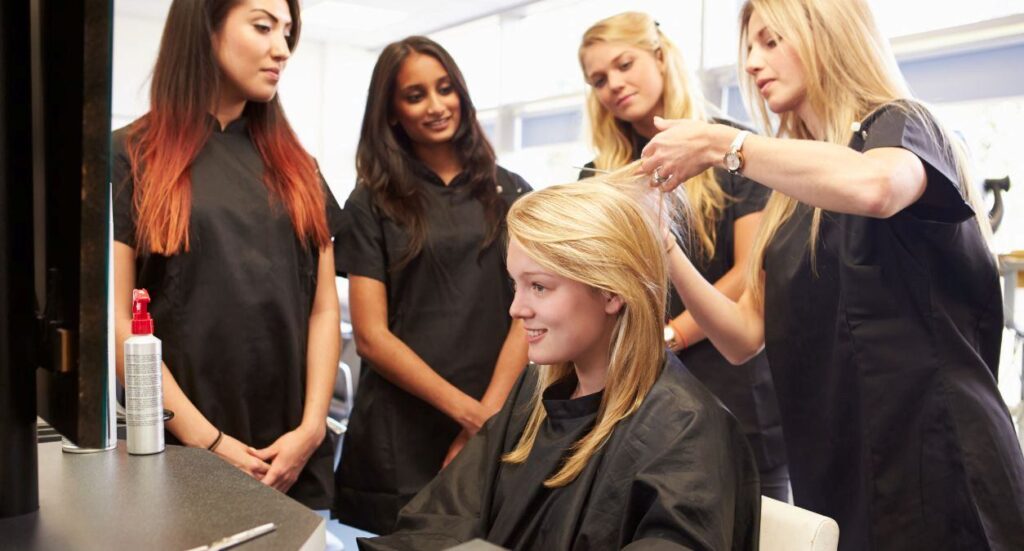
Starting a career in hairdressing through an apprenticeship involves several key steps:
- Research opportunities
Look for apprenticeship openings at local salons, hair academies, and national chains. Government apprenticeship portals and job boards are also useful sources. - Meet entry requirements
While many apprenticeships accept applicants straight from school, most expect basic English and maths qualifications (usually GCSE grade 3/D or above), a genuine interest in hair and beauty, and good interpersonal skills. - Apply for apprenticeships
Prepare a CV and cover letter highlighting your work experience, creative projects, or customer service roles. Emphasise your passion for hairdressing and your eagerness to learn. - Prepare for interviews
Many salons conduct interviews or practical assessments. You may be asked to demonstrate basic cutting or styling techniques, discuss hair care knowledge, or show how you would interact with clients professionally.
Once accepted, you will spend part of your week working in the salon and part attending training courses, gaining practical experience while learning theory.
What to expect during a hairdressing apprenticeship
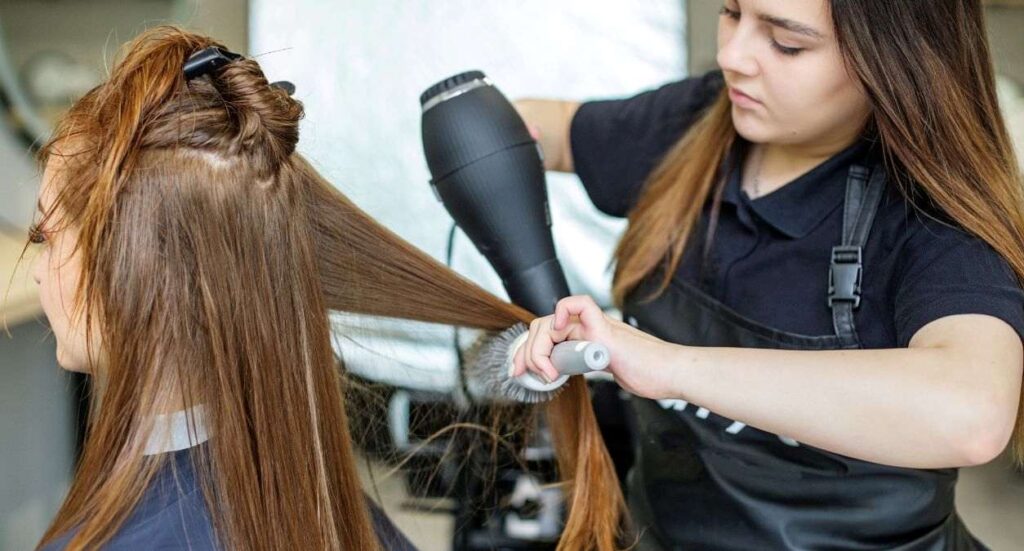
Hairdressing apprenticeships combine practical and theoretical learning.
On the practical side, you will:
- Shampoo and condition clients’ hair.
- Cut, trim, and style hair for different occasions.
- Perform colouring and chemical treatments.
- Conduct client consultations to understand their needs.
Classroom or online learning covers:
- Health and safety in salons.
- Hair and scalp biology.
- Product knowledge and retail skills.
- Effective communication with clients.
Mentorship is a key part of the apprenticeship. Experienced stylists guide apprentices, provide feedback, and help them build confidence in working with real clients. Progress is regularly assessed through practical tests and portfolio submissions, ensuring you meet industry standards by the end of your program.
How much do you earn as an apprentice hairdresser?

Apprenticeships allow you to earn while you learn, although salaries vary based on experience, age, and location.
Apprentice hairdressers typically start on the national minimum wage for apprentices, which is currently £5.28 per hour for under-19s or first-year apprentices. As you gain experience, wages can rise to between £8 and £10 per hour, especially in busy city salons. In addition, many salons allow apprentices to earn tips or commissions from product sales.
Earnings increase further once you qualify as a fully-fledged hairdresser. For more information on potential salaries and career progression, see our Hairdresser earnings guide.
How long does it take to qualify?
The time to become a qualified hairdresser depends on the apprenticeship level. Level 2 programs generally take 12–18 months to provide foundational skills, while Level 3 apprenticeships take 18–24 months to develop advanced techniques and client management skills.
After completing the apprenticeship, you will receive a nationally recognised qualification, such as an NVQ Level 2 or Level 3, along with a portfolio of work. This qualification allows you to work professionally as a stylist or specialise in areas such as colouring, extensions, or salon management. Some apprentices choose to continue their training with advanced courses to further enhance their skills and career prospects.
Benefits of a hairdressing apprenticeship
Hairdressing apprenticeships offer many advantages over traditional classroom learning:
- You earn while you learn, meaning you can support yourself financially as you gain experience.
- You gain hands-on experience from day one, working with real clients under the supervision of professionals.
- Apprenticeships provide mentorship and guidance, offering tips and techniques not available in textbooks.
- Many apprenticeships lead to career progression, including permanent salon roles, freelance opportunities, or management positions.
- They are often cost-effective, as the government and employers typically fund training, reducing or eliminating tuition fees.
Challenges to expect
It’s important to be aware of the demands of the role. Salon work can be physically tiring, with long hours, early starts, or late finishes. Working with real clients brings responsibility and pressure, especially when learning new techniques. Busy salons require multitasking and adaptability, and mastering cutting, styling, and colouring can take time and patience. Despite these challenges, apprenticeships provide invaluable experience that prepares you for a rewarding career.
Career opportunities after an apprenticeship
Completing a hairdresser apprenticeship opens the door to a variety of career paths:
- Salon Stylist: Full-time employment in small or large salons.
- Freelance Stylist: Working on weddings, photoshoots, or events.
- Specialist Roles: Colouring, extensions, bridal styling, or barbering.
- Salon Management: Supervisory roles overseeing staff, appointments, and business operations.
- Entrepreneurship: Many apprentices eventually open their own salons or businesses.
The apprenticeship provides the skills and confidence needed to build a creative, flexible career in hairdressing.
Tips for securing an apprenticeship
To improve your chances of landing an apprenticeship, you should:
- Gain early experience through volunteering, work placements, or practising on friends and family.
- Showcase your creativity with a portfolio of hairstyles or projects.
- Develop strong communication skills to interact effectively with clients.
- Research salons and tailor applications to match their style and values.
- Stay up-to-date with trends, attend workshops, and participate in competitions.
Final thoughts
A hairdresser apprenticeship is a practical and rewarding route into a long-term career. It combines real-world experience, mentorship, and formal training while allowing apprentices to earn an income. From your first client to advanced colouring techniques, apprenticeships equip you for a career where creativity, client service, and personal style come together.
For anyone passionate about hair and beauty, an apprenticeship provides the ideal foundation. To explore potential earnings, career progression, and long-term prospects, check out our detailed Hairdresser earnings guide.
Get Hairdressers Insurance from Protectivity
*Disclaimer – This blog has been created as general information and should not be taken as advice. Make sure you have the correct level of insurance for your requirements and always review policy documentation. Information is factually accurate at the time of publishing but may have become out of date.
Last updated by