


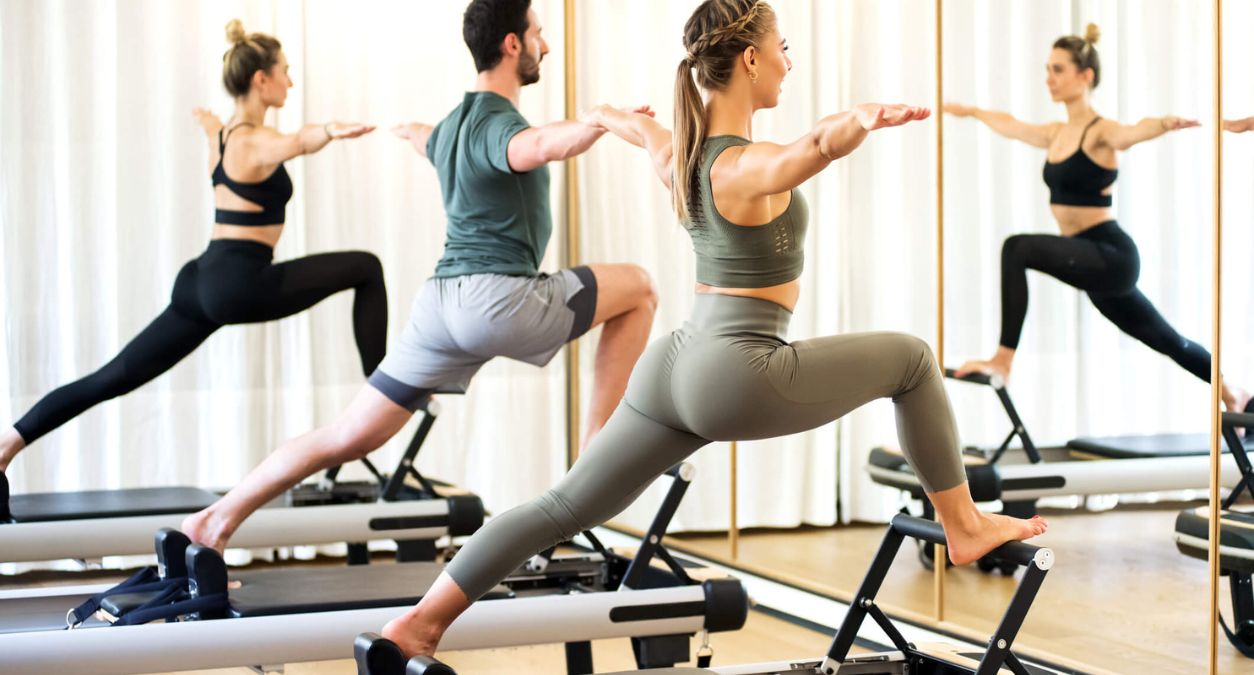
How to become a Pilates Instructor

Table of contents

Pilates offers low-impact routines for building agility, flexibility and strength, attracting some 12 million adherents worldwide*. As an indication of its popularity in the UK, Pilates retained its place during the recent pandemic.

So, if you enjoy Pilates, why not turn your passion into a business and learn how to become a Pilates instructor?

About us

Whenever your business is built on personal relationships with your clients – but especially Pilates training that involves close personal contact – there is always the risk of public liability claims. Protection against these makes our Pilates Instructor Insurance so critical for anyone contemplating this kind of business.

Our policies also extend to professional indemnity insurance – another vital safeguard for anyone in the business of offering advice and making recommendations on physical fitness – together with cover for the equipment you use.


Becoming a Pilates instructor

If you are interested in becoming a Pilates instructor, let’s take a closer look at what you need to know.


What skills do you need?

A core quality will be your empathy towards and concern for other people. This will be backed up and demonstrated by the power and understanding of your verbal and non-verbal communication skills.

You will exercise those qualities in the way you watch and observe your clients in action – giving particular attention to their movements and posture. As a result, you can inspire and motivate your clientele in a common quest to mould better versions of themselves.

To achieve this, you must understand and gain extensive knowledge of posture and movement.


What qualifications do you need to be a Pilates instructor?

The entry-level qualification is the Level 3 Diploma in Teaching Mat Pilates. With this training, you can become a Pilates instructor with the authority to teach the routines either to groups or on a one-to-one basis.

The length of your training course will depend on a whole host of factors – mainly determined by the amount of time you can commit and the work you put into the course. Typically, students qualify between four and nine months.

As you develop your skills as a Pilates instructor, you may want to underscore your sense of professionalism and recognition of the level at which you can offer Pilates training by gaining your Level 4 Certificate in Mat Pilates.

Our blog Pilates Teacher Training and Qualifications discusses what qualifications you’ll need in a bit more depth.


Can you make a living as a Pilates instructor?

Yes, you can! How much you will earn depends on how many hours a week you want to work and whether you are starting your own business or employed by a gym etc.

For example, with the former, it will take time to build up your clientele and therefore your earnings.

Sources say that if you are working as a fulltime Pilates instructor, you may be able to earn between £22k-£52k a year**.


Get teaching and get insured

Once you have qualified, you can apply to teach Pilates. You can look for opportunities advertised online or at your local gym. Or, you can start your own Pilates business.

Whichever way you decide to instruct Pilates, you need to make sure that you have Pilates Instructor Insurance to protect you and your clients.

Sources say that if you are working as a fulltime Pilates instructor, you may be able to earn between £22k-£52k a year**.


Summary

Being a Pilates instructor means you are your own boss and doing something you love. In addition, it allows you to earn an income while working reasonably flexible hours.

The popularity of Pilates globally and in the UK means that you are unlikely to be struggling too hard to find customers. However, the success of your business is likely going to depend on your development of the appropriate attitudes and aptitude, qualifications, and equipment – safeguarded, of course, by our Pilates Instructor Insurance.


Get Pilates Instructor Insurance from Protectivity


*Disclaimer – This blog has been created as general information and should not be taken as advice. Make sure you have the correct level of insurance for your requirements and always review policy documentation. Information is factually accurate at the time of publishing but may have become out of date. 

Recent Blogs

What is profit margin? Image

Business

What is profit margin?

For many small businesses, sales figures are the headline number. But revenue alone doesn’t determine succes

How to file company accounts online Image

Business

How to file company accounts online

Filing company accounts is one of those jobs that sounds more intimidating than it often is. If you run a small U

Incident insights in pet care: What 2025 claims data tells us Image

Pet Business

Incident insights in pet care: What 2025 claims data tells us

Caring for pets professionally is deeply rewarding, but it also comes with a unique mix of responsibility, unpred

Pros and cons of being VAT registered Image

Business

Pros and cons of being VAT registered

For many small business owners, VAT registration feels like a milestone. It often signals growth – but it can

Business website requirements: is having a website important? Image

Business

Business website requirements: is having a website important?

Most customers start their search for a product or service online. That’s why, for many small businesses, a web

What is PAYE? Image

Business

What is PAYE?

Taking on employees is a major step for any business, but it also brings new legal and financial responsibilities

How to register a business in the UK Image

Business

How to register a business in the UK

Essential steps for independent businesses Starting a business can combine freedom and ambition; the freedom

What is a Purchase Order? Image

Business

What is a Purchase Order?

Managing finances is one of the most demanding aspects of running a small business. As operations grow, so do the

What is the National Minimum Wage for employers Image

Business

What is the National Minimum Wage for employers

The National Minimum Wage plays a crucial role in protecting workers’ pay while shaping employment costs for bu

What is an SME? Small business status explained Image

Business

What is an SME? Small business status explained

If you run an independent business in the UK, whether you’re a freelancer, sole trader, or running a small, lim

Simply find the insurance you need.