

How to become a massage therapist

Have you ever considered how to become a massage therapist, and how to turn your skilled hands and passion for care into a career opportunity? Whether working full-time or on a self-employed basis, massage therapy could be your way to do a job that you love – and potentially earn a good living at the same time.

If you want to know how to become a massage therapist, then this guide is the perfect place to start. We’ll give you all the key information you need to know: the qualifications and skills you need to be successful, how much you could potentially earn, and how to go about setting up your own massage therapy business.


Why is massage therapy so popular?

Massage therapy is being used by more and more people, hence the rise in opportunities to make it a career. The range of massages that can be administered is huge, including sports massages that help muscles and joints, shiatsu that undoes any knots and stresses, and Swedish massages that reduce tension.

The physical benefits of massage therapy are well-known, but at a time when people’s mental wellbeing is in sharper focus, massages are increasingly being used to help the mind as well as the body. Being able to relax for a period of time, and remove all the strains and pains from the body, can make a huge difference to a person’s mood and character.


What does a massage therapist do?

Obviously, the core of your role as a massage therapist will be to deliver massages of the highest possible standard, and help your clients get the best possible results. But that’s only one part of the job.

There’s a lot of planning that goes into effective massage therapy and treatment. You’ll need to identify the areas of the body which need the most attention, and work out the best way to apply your hands to good effect. Within this, you may need to speak with the client to identify their needs and objectives, and potentially explore their lifestyle, diet and medical records as part of your planning.

Your business administration tasks will include keeping client records up-to-date; maintaining clear communication with clients before, during and after therapy; and referring clients to other medical professionals if you feel that they need further help. Connected to this, you may also be required to give advice to clients on how to maintain good physical and mental wellbeing in their day-to-day lives.
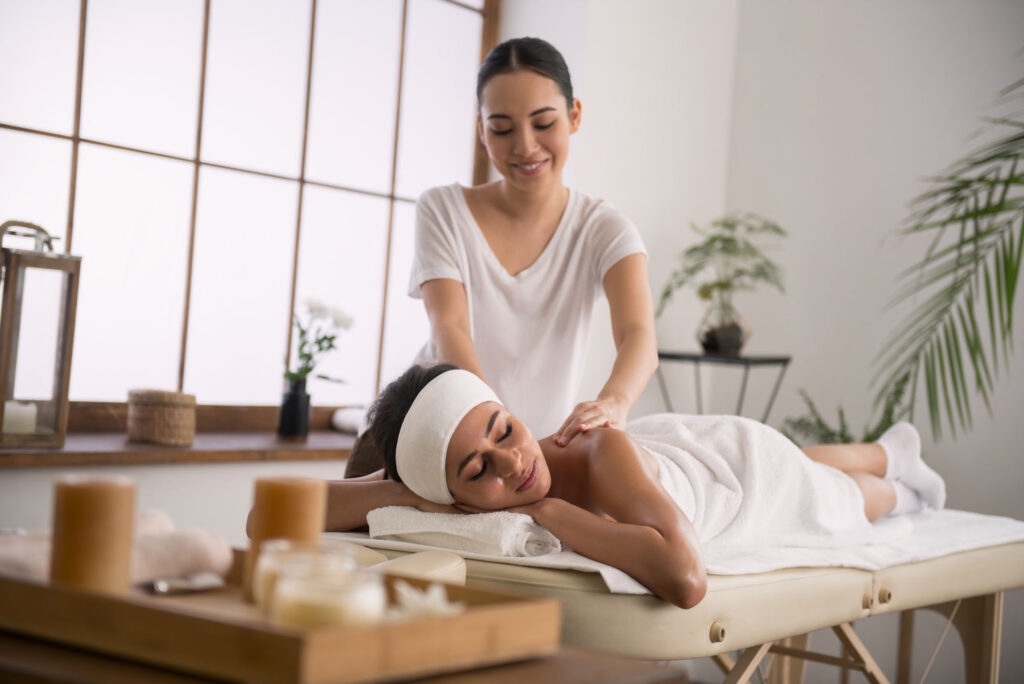
 

What qualifications does a massage therapist need?

While it’s true to say that it isn’t a legal requirement to get massage therapy qualifications, you’ll find it very difficult to progress your career without them. Businesses hiring massage therapists will be looking for your qualifications on your CV before pretty much everything else, while clients searching for self-employed massage therapists will want concrete proof of your credentials.

The good news is that you don’t need to commit the time and money of getting a degree to obtain the qualifications that you need. Instead, you can take more vocational courses like the International Massage Diploma, or a course certified for Continuous Professional Development (CPD). You can also explore options like a BTEC in Advanced Clinical and Sports Massage, as well as advanced vocational courses which can allow you to get trained in specific massage techniques and specialisms.

If you’re looking for an alternative that can allow you to work and train at the same time, then there may well be massage therapy apprenticeships available to you, too.


How long does it take to qualify as a massage therapist?

How long is a piece of string? There are so many different qualifications that there’s no fixed timeframe you should devote to becoming qualified. Certainly, you should expect to take anywhere between one and three years to get your credentials up to a good standard for a professional. However, you should never stop learning: there are always new techniques, opportunities and specialisms to explore, so in theory, your work to get qualified should be a constant process throughout your career.


How much do massage therapists earn?

There’s no hard and fast rule about how much you can earn as a qualified professional massage therapist. That’s because your location, level of experience, and specialist areas of expertise will all influence your earning potential. There’s also a substantial difference between working full-time for an employer, and working for yourself on a self-employed basis.

As a general rule, a full-time employed massage therapist can expect to earn around £30,000 a year, although this can be higher if you have specialisms or skills that are relatively rare or in high demand. If you work for yourself, then theoretically your earning power is limitless, depending on the hours you’re willing to work, the rates that you charge, the amount you lose to tax and expenses, and how well you market yourself.

 

How do I start my own massage therapy business?

If you decide to go down the self-employed route, then you’ll also have plenty of business-related duties to take on, in order to maximise your profitability and comply with rules and regulations. These include (and are not necessarily limited to):

Business type

You’ll first need to work out whether you want to operate as a sole trader or register as a limited company. While the limited company option is a little bit more complex from an administration perspective, it does give you separation between your personal finances and those of your business operation. If you run into debt or you face a substantial liability, this can give you extra protection and ensure that your home or other assets don’t end up at risk.

Rates and expenses

It’s vital to strike the right balance with the fees you charge your clients. You’ll need to take into account how much you want to earn, and how much you’re paying out in your business overheads and expenses. But you’ll also have to consider how competitive your rates are against other massage therapy businesses in your area, and avoid pricing yourself too cheap – or too expensive.

Marketing

It’s vital to get your name and your unique selling point out there, especially in a relatively saturated market like massage therapy. While social media and online promotion will play a big part, don’t overlook physical methods of advertising, such as leaflets, flyers, business cards and advertising your local paper. You should also try to leave marketing materials in places relevant to your specialism (e.g. at leisure centres if you offer sports massages).

Insurance

Insurance is strongly recommended for any small business – and if you employ anyone else to work for you, then having employer’s insurance cover is a legal requirement. Even if you provide your massages from home, you may not necessarily be covered under the terms of your home insurance, so it’s always strongly recommended to take out cover that’s specific to the nature of your business. Good cover will also protect the value of your equipment such as massage tables.


Get massage therapy insurance with Protectivity

As with every type of small business, taking out comprehensive insurance cover is crucial, particularly having specialised insurance for massage therapy.

Protectivity’s massage therapy insurance is designed with skilled entrepreneurs like you in mind. Our cover includes public liability insurance of up to £5million, professional indemnity, personal accident, equipment cover, and employers’ liability if you employ other people.

Our policies are available through flexible payment plans giving you peace of mind and the confidence to grow your business. Take a closer look at our massage therapy insurance in more detail today.

Get Massage Therapist Insurance from Protectivity


*Disclaimer – This blog has been created as general information and should not be taken as advice. Make sure you have the correct level of insurance for your requirements and always review policy documentation. Information is factually accurate at the time of publishing but may have become out of date. 

Recent Blogs

Choosing the right location for your salon Image

Business

Choosing the right location for your salon

For many beauty professionals, opening a commercial salon is an exciting milestone. Whether you're currently work

Salon Startup Costs: Budgeting beyond the basics Image

Business

Salon Startup Costs: Budgeting beyond the basics

With beauty services in consistent demand, salon ownership is still an attractive business opportunity. The Briti

11 mins read

Public Liability vs Professional Indemnity: Getting the right insurance Image

Business

Public Liability vs Professional Indemnity: Getting the right insurance

Getting the right business insurance is a stepping stone worth putting some time into. The details might seem dul

Managing risk in your beauty salon Image

Business

Managing risk in your beauty salon

For many salon owners, the biggest risks aren't always the most obvious.  While preventing slips, trips or

How much can bad reviews cost your business? Image

Business

How much can bad reviews cost your business?

Understand the real impact on sales, reputation; and why your response matters most  For many trades and servi

Understanding business risks before they become costly problems Image

Business

Understanding business risks before they become costly problems

Today's economic landscape presents new challenges for businesses. Rising employment costs, increasing overheads

10 mins read

Food safety during heatwaves: Practical tips to prevent stock loss Image

Caterer

Food safety during heatwaves: Practical tips to prevent stock loss

Food safety during heatwaves hit the headlines in June 2026, when supermarkets across the UK were forced to dispo

12 mins read

Can self-employed people get sick pay? Financial support, benefits and protection explained in 2026 Image

Business

Can self-employed people get sick pay? Financial support, benefits and protection explained in 2026

If you're employed and wake up too ill to work, you may still receive some income through Statutory Sick Pay or a

11 mins read

Tool Theft in 2026: Why every tradesperson should be recording tool serial numbers Image

Trades

Tool Theft in 2026: Why every tradesperson should be recording tool serial numbers

For self-employed tradespeople, tools are not just kit. They are what keep jobs moving, customers happy and money

How to start a mobile sandwich business in the UK Image

Business

How to start a mobile sandwich business in the UK

Based on UK small business and catering industry requirements For many aspiring business owners, it’s not ju

11 mins read

Simply find the insurance you need.