

10 Traditional Reiki Hand Positions

Table of contents

Reiki is a Japanese technique for stress reduction and relaxation which also promotes healing. The belief behind this treatment is that a life energy is flowing through our bodies and if this energy is low then we are more vulnerable to illness and stress.

Reiki treatments increase this life energy by placing hands on, or just above the body, creating beneficial emotional and physical effects, healing pain, reducing stress and anxiety.


A typical Reiki session

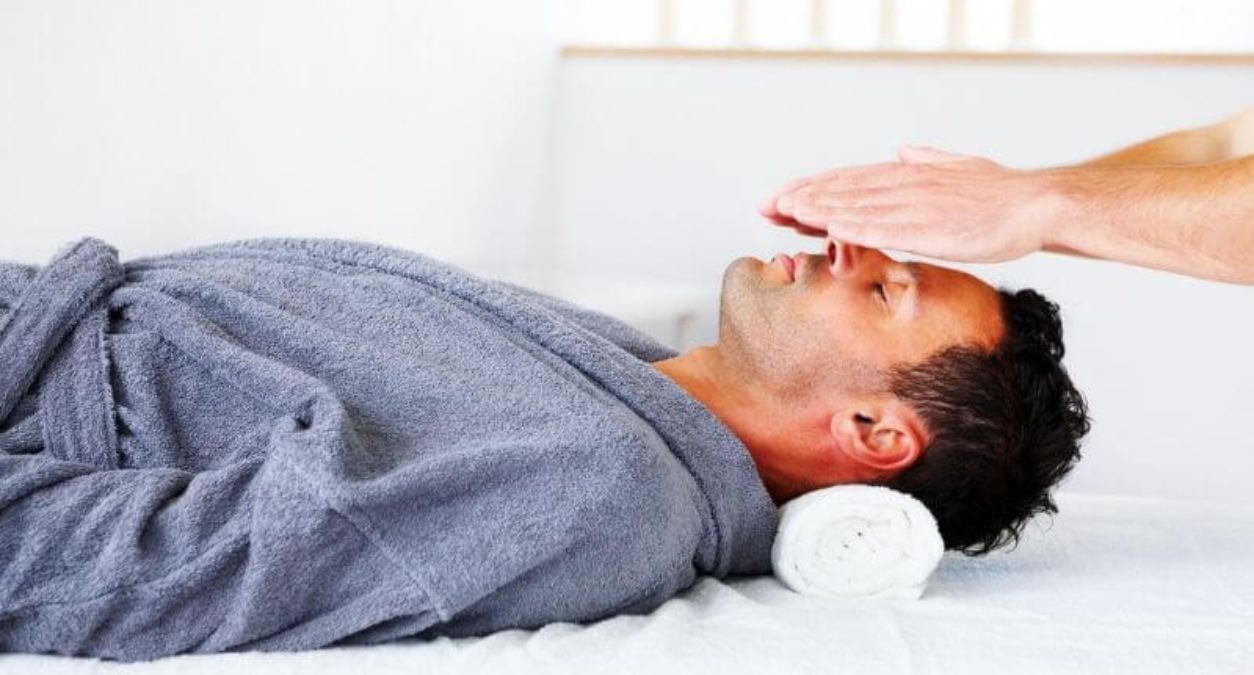
During a Reiki Treatment, a client will lie on a massage table, or a chair if they prefer. There is no significant pressure applied during a Reiki session, instead a practitioner will gently place their hands on a client.

There are a series of key hand positions which, when done in the correct way, will generate the effects needed. Here is a guide to some of the most popular hand positions.

1. Place the palms of your hands gently on your client’s forehead and cover the eyes. Take care not to cover the nose and restrict your client’s breathing.


2. Place hands gently around the temples.


3. Cradle the head by rocking the head very gently from one open palm and then to the other eventually achieving a balanced hold. Your own hands can rest on the table underneath your clients head.


4. Hands are gently placed over your client’s throat. If they don’t feel comfortable with this then your hands can be placed under the throat instead.


5. Hands are placed over the heart and the heart chakra (located between the breasts). They are then placed gently over the upper abdomen.


6. Hands are placed gently over your mid abdomen (solar plexus).


7. At this point, you, as a Reiki Practitioner might continue treatment to include your client’s legs.

Both hands are placed gently on the leg. Repeat for the other leg.


8. Put one hand on the bottom of each foot.


9. The next step would be to ask your client to roll over to their front and for you to apply pressure to your client’s shoulder blades and middle back and then the lower back.


10. At the end of a treatment you may move your hands all over your client’s body to cleanse and remove any leftover debris, transforming any negative energies into positive ones.


At Protectivity, we provide a wide range of what we believe are cost-effective insurance solutions for therapy professionals including Reiki Insurance, Counselling Insurance, Massage Insurance and many more. To see if your speciality can be covered, just visit our Therapy Insurance page and input your technique into the quote box. If we can cover the activity, we will provide you with an instant price.

Get Therapist Insurance from Protectivity


*Disclaimer – This blog has been created as general information and should not be taken as advice. Make sure you have the correct level of insurance for your requirements and always review policy documentation. Information is factually accurate at the time of publishing but may have become out of date. 

Recent Blogs

Managing risk in your beauty salon Image

Business

Managing risk in your beauty salon

For many salon owners, the biggest risks aren't always the most obvious.  While preventing slips, trips or

• 8 mins read

How much can bad reviews cost your business? Image

Business

How much can bad reviews cost your business?

Understand the real impact on sales, reputation; and why your response matters most  For many trades and servi

• 7 mins read

Understanding business risks before they become costly problems Image

Business

Understanding business risks before they become costly problems

Today's economic landscape presents new challenges for businesses. Rising employment costs, increasing overheads

• 10 mins read

Food safety during heatwaves: Practical tips to prevent stock loss Image

Caterer

Food safety during heatwaves: Practical tips to prevent stock loss

Food safety during heatwaves hit the headlines in June 2026, when supermarkets across the UK were forced to dispo

• 12 mins read

Can self-employed people get sick pay? Financial support, benefits and protection explained in 2026 Image

Business

Can self-employed people get sick pay? Financial support, benefits and protection explained in 2026

If you're employed and wake up too ill to work, you may still receive some income through Statutory Sick Pay or a

• 11 mins read

Tool Theft in 2026: Why every tradesperson should be recording tool serial numbers Image

Trades

Tool Theft in 2026: Why every tradesperson should be recording tool serial numbers

For self-employed tradespeople, tools are not just kit. They are what keep jobs moving, customers happy and money

• 8 mins read

How to start a mobile sandwich business in the UK Image

Business

How to start a mobile sandwich business in the UK

Based on UK small business and catering industry requirements For many aspiring business owners, it’s not ju

• 11 mins read

Rules for Apprenticeships in Small Businesses Image

Laws, rules and regulations

Rules for Apprenticeships in Small Businesses

Taking on an apprentice can be a great way for small businesses to grow their team while developing new talent.

• 5 mins read

Bona Fide Subcontractors Explained Image

Business

Bona Fide Subcontractors Explained

Subcontractors are common in self-employed circles, but if you work in construction or trades in the UK, youâ€

• 8 mins read

How much money do you need to start a business Image

Starting a business

How much money do you need to start a business

One of the first questions many people ask when considering self-employment is a simple one: how much money do yo

• 7 mins read

Simply find the insurance you need.